Best Outdoor Furniture Material NZ: Teak vs Powder-Coated Aluminium
If you’ve spent any time browsing outdoor furniture, you’ve probably landed on this exact fork in the road: teak, or powder-coated aluminium? They’re two of the most popular materials we sell at Modern Style, and for good reason; both are genuinely excellent choices for New Zealand conditions. But they get there in very different ways, and which one lasts longer for you really depends on where you live, how you use your outdoor space, and what kind of look you’re after.
We’re not here to tell you that there’s one right answer, but rather, we’ll take you on a tour of how well each material stands up to our salty winds, UV rays, and the Kiwi winter. We’ll walk you through exactly what you need to do (day-to-day) for each material, as well as what you can expect five years from now.
How each material handles New Zealand conditions
Salt air & coastal exposure
If you’re lucky enough to have property on the coast, then you will know all about salt. But even those who live kilometres away from a beach or harbour will be blessed with a regular dose of ‘salt air’.
Aluminium doesn’t rust – and if you give it an excellent powder coat, then this makes it almost impervious to anything, including salt spray. This is exactly why powder-coated aluminium outdoor furniture NZ buyers choose tends to be some of the lowest-maintenance you’ll find.
The same can be said for teak; after all, they have used it for boat decks for centuries, and it remains one of the most popular choices for teak outdoor furniture NZ homeowners rely on. Its natural oils indeed protect it quite effectively against salt air. In reality, though, the natural oils degrade over time and need to be replenished with teak oil or modern protectors and sealants. A quality treatment ensures that the timber doesn’t soak up salt, preventing it from drying out, cracking, or developing black mould.
UV exposure
New Zealand’s intensely high amount of UV light is particularly tough on outdoor furniture – and will have an effect on any outdoor furniture over time.
In New Zealand conditions, even a high-quality UV-stabilised powder coat will show signs of oxidising/chalking/fading over time – primarily on UV-attracting darker colours on horizontal surfaces that are fully exposed. Lighter colours may show no signs of this, allowing it to hold its colour well over many years. There are some care and maintenance tips to minimise effects.
Teak ‘fades’ in the sense that continuous UV exposure causes it to transition from a warm honey brown to a silvery grey shade in a short time if left unoiled or unprotected. Neither look is inherently right/wrong; it just depends whether you want your furniture to look almost new in 5 years, or to develop a weather-beaten character.
Frost & winter damp
Aluminium doesn’t absorb moisture, so freeze-thaw cycles simply aren’t an issue, handy if you’re in Christchurch, Central Otago, or anywhere that sees a hard frost. Damp, shady locations may promote the growth of green algae, but this only requires simple cleaning.
Teak’s tight grain and initial natural oils make it water-resistant, so it isn’t immediately prone to cracking or splitting. It does appreciate a bit of regular attention (more on that below) to keep performing at its best through a wet, cold winter. Black mould can form on teak if it is left damp for long periods.
The maintenance reality check
This is where the two materials really differ, and it’s worth noting what ongoing care actually looks like for each.
Aluminium is about as low-maintenance as outdoor furniture gets. A regular wipe-down with mild soap and a rinse with clean water every so often is mostly all it needs. It will, however, keep its look longer if it is covered, and a UV protectant like a car wash and wax is used for the cleaning above.
Teak asks a little more of you, but not much. Left alone, it will simply weather to that natural silvery grey; plenty of people love this look and do nothing at all beyond an occasional clean with mild soap and water. Your actual conditions may mean a 2-yearly clean with a teak cleaner to remove any buildup of black mould. If you’d rather keep teak’s original warm brown tone, you’ll want to oil or protect/seal it once or twice a year. Either way, teak is genuinely low-maintenance by timber standards; it’s really the oiling/protecting step, entirely optional, that separates it from aluminium’s low-maintenance care routine.
In both cases, use of furniture covers will minimise cleaning and long-term weathering. Teak covers must be breathable to prevent mould growth.
Weight & wind: when heavier is actually better
Here’s a trade-off people don’t always think about until they’ve lived with it: weight.
Teak is a dense, heavy hardwood, and that weight is a real asset on an exposed site. A solid teak lounge setting isn’t going anywhere in a stiff Wellington southerly or Canterbury Norwester, and that stability matters more than people expect – until they’ve had lightweight furniture end up in the paddock next door!
Aluminium furniture, by contrast, can be lightweight, brilliant if you like to rearrange your space for entertaining, or if you’re setting up a bach where furniture needs to be moved, put away, or shifted with the seasons. On a very exposed site, though, that same lightweight means you’ll want to think about wind more carefully; many of our more solid aluminium designs with the legitimate heavy-gauge aluminium weight in the frame are plenty heavy enough, but aluminium settings generally benefit from a more sheltered spot than teak needs.
What each material actually looks like after 5 years
This is the question people really want answered, so here’s the honest picture.
A quality powder-coated aluminium piece, five years in, if looked after well (think cleaning, weather covers, UV protector), can still look crisp, with clean lines, held colour, no rust, and minimal wear, perhaps only some very light surface scuffing if it’s had a hard life. It ages by essentially not ageing much at all. Not maintained or cleaned, and it will look decidedly average.
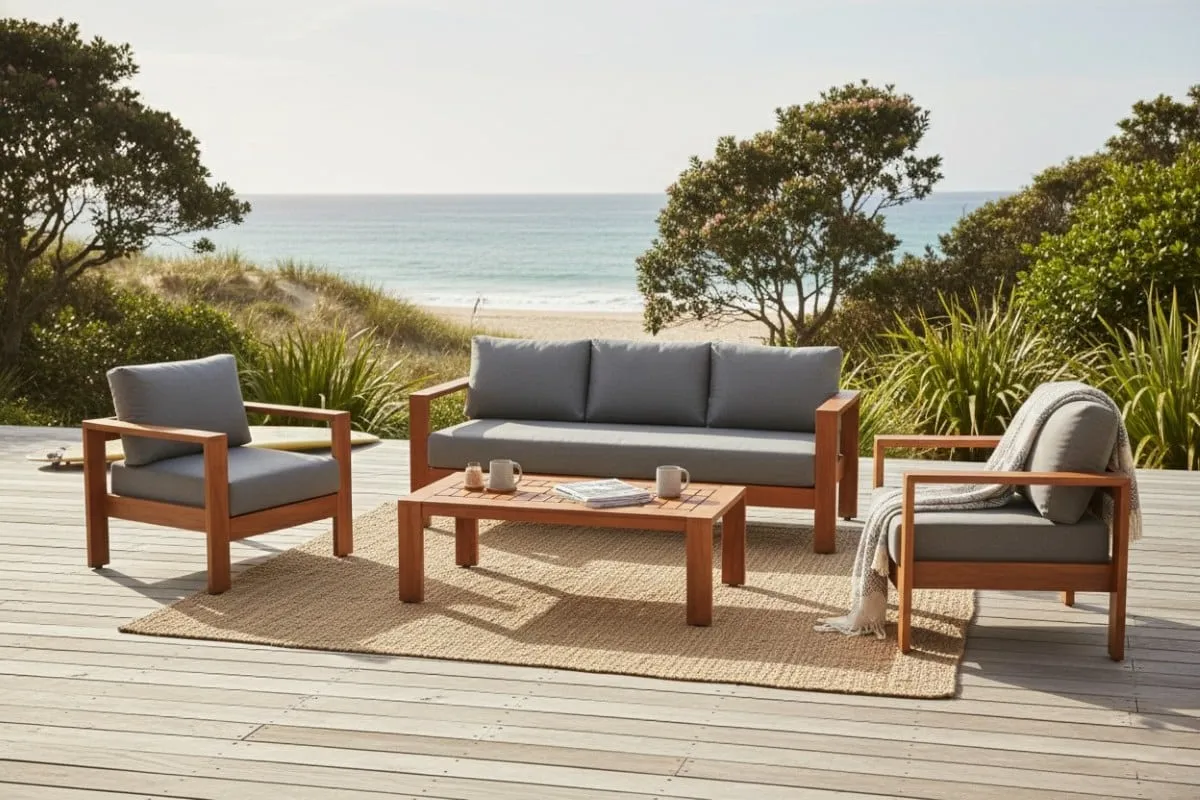
Teak, five years in, can look almost brand new, or like teak that’s been loved. If you’ve cleaned, and oiled or protected it regularly, it’ll still show much of its original warm brown character with a bit of natural texture developing. If you’ve cleaned it regularly but left it to weather naturally, it’ll have settled into that soft silvery grey that so many people specifically choose teak for in the first place. Either way, it develops a look that’s genuinely different from new, not worse, just more lived-in, in the way that good natural materials tend to.
Verdict table by situation
| Your situation | Better fit | Why |
| Right on the coast, minimal maintenance wanted | Either | Both require some care in this situation, but are equally suitable. |
| Exposed, windy site (Wellington-style conditions) | Teak, or choose heavy aluminium settings | Weight keeps it planted; won’t shift in gusts |
| Covered patio or courtyard, less weather exposure | Either, comes down to look | Both perform well when partly sheltered |
| Bach or holiday home, furniture needs to be moved/stored | Powder-coated aluminium | Light enough to shift, stack, or store easily |
| You want that natural, ages-beautifully character | Teak | Develops patina and warmth other materials can’t replicate |
| Frost-prone region (Christchurch, inland Otago) | Either, both handle frost well | Neither, if teak is maintained, is moisture-absorbent enough to crack |
| Full sun, minimal shade | Either | Both require some care in this situation, but are equally suitable. |
The bottom line
There’s no universally “better” material here, just the one that’s better for your specific spot, your climate, and how much maintenance you’re genuinely willing to do. If you want furniture that looks essentially the same on day one and year five, you will need to look after it; aluminium will still need to be cleaned, covered, or UV-protected. Teak will need to be cleaned, oiled or coated regularly. If you want furniture with real natural character, that ages the way good timber does, teak is well worth the investment, especially in an exposed, windy spot where its weight is a genuine asset rather than a drawback.
Want a closer look at either material before deciding? We’ve gone deeper on each individually, read more on why teak is such a strong choice for outdoor furniture, or why powder-coated aluminium performs so well in NZ conditions.
Frequently asked questions
Which lasts longer, teak or aluminium outdoor furniture? As we’ve said before, both can be expected to last for decades if cared for properly (so it’s less a matter of how long they’ll last but rather what sort of look you’re after). You won’t be able to tell the difference between brand-new powder-coated aluminium and after 5 years’ use with regular cleaning, covering, or protecting, whereas Teak will develop a natural patina, whether this comes as a result of occasional cleaning, oiling/protecting, or just from weathering to a silvery grey. Neither is the “wrong” choice; they simply age differently.
Does powder-coated aluminium rust? No, aluminium itself doesn’t rust, since rust is a form of iron oxide and aluminium contains no iron. A quality powder coat adds a further sealed, weather-resistant layer on top, which is why it holds up so well even in coastal, salt-heavy conditions. However, powder-coated aluminium can oxidise through pin-prick holes in the powder coating, especially when exposed to salt. This won’t affect the structural frame over decades, but it will affect the surface coating. This can be avoided by regularly rinsing with fresh water (especially if under cover and not exposed to rain), covering when not in use and using a motor vehicle wash in wax to seal the frame.
Do I need to oil teak furniture every year? Only if you want to preserve its original warm brown colour. Left alone, teak weathers naturally to a classic silvery grey that plenty of people love, and needs nothing beyond an occasional clean. If you’d rather keep that honey-brown tone, an oil or protective treatment once or twice a year will do the trick.
Which is better in windy areas, teak or aluminium? Teak’s natural weight is a real advantage on an exposed, windy site; a solid teak setting is far less likely to shift or slide in a strong gust than a lighter aluminium piece. Aluminium is still a fine choice for wind, especially for heavy designs, but it benefits from a slightly more sheltered spot than teak does.
Is teak or aluminium more affordable in the long term? Teak has an ongoing cost (if oiled or protected) whilst aluminium’s running cost comes out near enough zero. Covers, which will substantially extend the life of Aluminium coatings and minimise teak maintenance, will be similar for either but may need replacing every 2-3 years. Upfront price will tend to be higher for teak, so we suggest carefully considering the look you want and your environment and propensity to maintain.
See both in person
Photos only tell you so much; the real test is sitting in a piece, running your hand over the finish, feeling the weight, and testing the comfort.
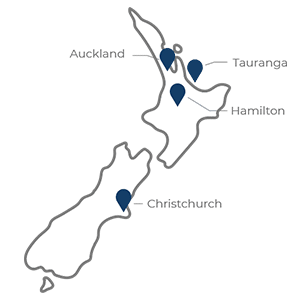
We have both teak and powder-coated aluminium lounge settings on display in our Auckland, Hamilton, Tauranga, and Christchurch showrooms, so you can compare them side by side.
Whether you’re after lounge settings or dining tables, every piece we sell is backed by our warranty, and our care and maintenance guide has everything you need to keep either material looking its best for years to come.
Visit One of Our Showrooms Across New Zealand